As a consumer – and aspiring or practicing connoisseur – of local food, you may have heard that one of the best ways to learn about the food you’re purchasing is to talk directly with the folks growing it. But that may not always be as simple as it sounds. Standing in line at a farmers’ market to buy your beets and bok choy, for example, might not feel like the right moment to ask about how those beets were grown or the farming practices used.
 This challenge is one of the forces behind why Ashley and Caleb, owners of Sungrounded Farm, maintain organic certification through Oregon Tilth. They even went a step further to secure the Real Organic certification from a separate third-party organization. They understand that clear, transparent standards are crucial for consumers, and they believe the accountability that comes with certification fosters trust between them and their customers.
In a conversation with Ashley about their farm and its ethos, the reasons behind their decision to become certified organic became clear. For them, it’s all about what makes sense for them, their consumers, and the land they steward.
Ashley and Caled apprenticed on a farm that was deeply committed to organic practices. When they began searching for land near Eugene, they found prices prohibitively high. e. Eventually, they purchased land in Terrebonne, drawn by a community that was eager for local food. Central Oregon offered unique market access compared to the Willamette Valley, and was full of opportunity. Ten to fifteen years ago, there were very few larger, productive farms growing produce in the area, but as the region has grown, so has the demand for local food, creating new opportunities for farms like theirs. But with growing populations, demand for local food has only increased.

They knew that if they could make it work in the high desert, they could help fill a crucial gap in local food production – and becoming certified organic was a clear choice. When they purchased the property, they were able to get the previous landholder to verify the date of the last chemical application. This documentation shortened their organic transition period, which typically takes three years, and would have otherwise started from the date of purchase without that confirmation.
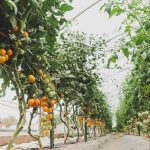
Living and farming in the high desert requires significant infrastructure and season extension, which comes with a hefty upfront cost. “Everyone knows that,” Ashley says, “but I think we’ve just been on the train of, ‘Maybe this is enough hoop houses!’ and then it’s not, and we have to build another one.” She explains that all local farmers experience this as their farms expand. “We can really only do so much in such a short window without it.” The growing season ranges between 70-100 days, depending on your location. In their ninth season in 2025, it’s amazing to see how much infrastructure they have and how well-utilized their land is.
Farming in this region requires long-term planning and access to funding for equipment in the early years, Ashley explains. She also highlights that staying organized is crucial to surviving the busy season. “The season can get so out of control so quickly. I see people who don’t plan ahead and really struggle when things get busy.” Sungrounded’s success depends in their off-season preparation: evaluating what went well, developing a detailed crop plan, and analyzing which crops and operations are the most profitable. “It’s boring,” she admits, “you don’t want to do it. Too much office work. But it’s necessary.”
When it comes to organic certification, “there are a lot of questions about whether certification is worth it, especially for small farms,” Ashley acknowledges. “But I really believe in a third-party certifier.” She believes in it enough, she says, that they’ll spend money they don’t really have and “go through a lot of hullabaloo” to maintain certification.
While she didn’t go into detail, Ashley and others hint at the paperwork, costs, annual inspections, and some of the bureaucratic hurdles that come with the process. One example she shared was related to timing: organic certification follows a fiscal year, and they completed theirs in August, late in the Central Oregon growing season, when burnout is real. The fee wasn’t prorated, and at that point, they didn’t yet have any materials developed to market their organic status. Ashley noted that advice about issues like this timing would have been especially helpful early on; a farmer interested in certifying may not know to ask these questions.
When asked about the dilution of the organic certification’s significance, which has come up in other conversations, Ashley explains, “It’s a small subset of people who don’t trust it at all. There are a lot of people who have reservations, especially other growers.” But, she adds that those who are skeptical are often concerned with large-scale companies manipulating what’s allowed in organic farming. “But it’s not just about certification: it’s about whole-system management,” Ashley stresses. “Hydroponics, for example, isn’t grown in an organic system that uses nature to support the food. It’s not unhealthy, but it’s not grown in an organic system in a way that uses nature to support food.”
While trusting farmers is ideal, Ashley points out that some consumers may find it difficult to trust someone’s word alone. “There’s value in a certifier saying you’re doing what you say you’re doing,” she says.
Farms may offer conversations with consumers to build trust, but these can be limited by time and resources. Ashley noted that the farmers market, their main contact point with most of their customers, is a great opportunity to share their bounty – their displays are notably colorful and lush – but the lines grow quickly, and time is limited. Sungrounded, for example, doesn’t offer public farm tours or have a farm stand. So, Ashley finds reassurance in pointing to their certifications. “I don’t want people to have to be researchers to make a decision – we’re saturated with options,” she says, and this helps provide one way to help make a decision.
The Real Organic certification adds another layer of credibility to Sungrounded’s practices. This is an add-on facilitated by the Real Organic Project that emphasizes a more whole-system approach. Though consumers might not know the difference or significance upon first glance, Ashley hopes that over time, more people will become familiar with it. “I hope that when people are disillusioned by organic, if they see both logos, they’ll have more faith.” It is also that extra layer of accountability and guidance, aligning with their values as farmers and stewards with higher standards.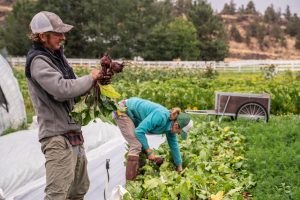
Ashley acknowledges that certification isn’t feasible – or necessary – for every farm, especially small-scale operations. She understands why some farmers choose not to pursue it. “It doesn’t make sense for a lot of people, and it is not the only important thing. There are other options for smaller farms.” Still, she emphasizes that as a farm grows and begins selling more food, certification becomes increasingly important and, as mentioned previously, is how she believes food should be grown regardless.
As a small market farm growing on two acres for CSA, farmers markets, and wholesale, Sungrounded receives certification subsidies typically ranging from $750–$1000. But that only covers about half of the annual cost, and only applies to their crop production. Certifying additional categories, such as their cows or eggs, would require separate certifications and incur extra fees. Despite these costs, Ashley stresses that certification is worth it, though she believes the certification process should be more highly subsidized. “A lot more people would be motivated if they didn’t have to shell out cash for it!” she says.
This sentiment echoes the concerns raised in conversations held by HDFFA with local farmers, many of whom cited the cost of certification and the need for infrastructure investments as major barriers to expanding their operations. For example, “it wouldn’t be worth it for a hobby farm,” Ashley says. “The base cost is too high.”
Ashley made a specific comment that shifted my perspective on how we refer to organic production. “There’s a movement and hope that – why are we calling it ‘organic’ versus ‘conventional’? This should just be regular food.” This sentiment reflects the core motivations of many organic farmers: this is simply how food should be grown and raised. “I imagine that all farmers and all customers are here for the same reason – wanting to support local, eat healthy. That’s the main reason people are shopping with us.” And, as Ashley aptly puts it, “The food speaks for itself.”
Learn more about Sungrounded Farm on their website here. HDFFA is highlighting farms in Central Oregon that are organic, transitioning, or considering becoming certified organic to share their stories. Look for future features over this next year!
This project is funded by the USDA Northwest Transitioning to Organic Partnership Program. Learn more about NWTOPP, and the programming offered – including mentorship, community building, workforce development, and education – at the Oregon Tilth website here.

Sungrounded Farm crew, 2024