If you’re at all tuned into the Central Oregon local food scene, chances are you’ve heard of Rainshadow Organics. For the past 15 years, this highly diversified, certified organic farm east of Sisters has been stewarded by Sarahlee Lawrence. The farm sits on her family’s land, 80 acres with vistas of the Cascade Range, and her passion for the land and the food grown there is unmistakable.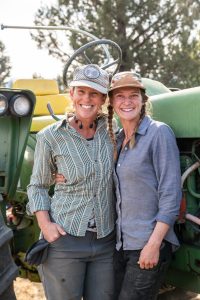
When Sarahlee and I we finally connected – after a few rounds of phone tag (she had warned me she “may or may not be on a tractor,” and she definitely was) – we spoke about her farming ethos, the evolution of Rainshadow, and what it means to be part of something bigger than yourself in today’s food system.
Sarahlee began farming in 2010 on a small plot of land, eventually transitioning the family acreage from hay and horses to diversified vegetable and livestock/animal production. From the outset, she knew she wanted to become certified organic. She was inspired by reading books by Michael Pollan to “be a part of the organic movement… I wanted to contribute and be counted,” she said. “You stop just ‘doing the damn thing’ and start adding mass to something that matters.” Rainshadow became certified organic in its very first year, a decision that has continued to shape the farm’s values and operations.
Last fall, HDFFA hosted a field day at Rainshadow Organics as part of a broader effort to learn about organic farming practices and bring together farmers – particularly during a time of shifting regulations and uncertain funding. What stood out that day was the depth of conversation and camaraderie among the farmers in attendance. Despite the late November chill and dormant fields, the event ran nearly two hours long, with lively discussion around topics like plastic use and innovative greenhouse tomato rotations. For Sarahlee, these conversations are essential, but she also emphasized that learning tough lessons firsthand is what makes them truly stick, and she wouldn’t change a thing about her journey to becoming a farmer
Rainshadow is a unique presence in Central Oregon, offering a year-round CSA and a full-diet program – something rare in this region. Their farm store is a reflection of this: stocked year-round with everything from hot sauces and preserves to pasture-raised meats, grains, flours, and storage crops like squash and root vegetables.
Through the CSA model – Community Supported Agriculture, where members invest upfront for a share of the harvest throughou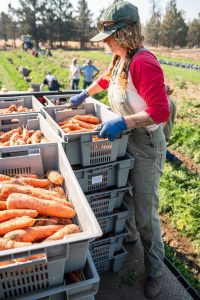 t the season – Sarahlee sees not just economic support, but genuine partnership. “The folks who sign up early, ask questions, and show up each week… they’re the gems,” she says. “They’re not a dime a dozen; they’re one of a kind.”
She also sees increasing participation from working families and people using SNAP/EBT benefits to access healthy, local food – something she strives to continue to offer as a way to participate.
When asked about the difference between organic and conventional farming, Sarahlee is candid: “I don’t know what it’s like to farm conventionally. Farming is hard, period—and I don’t want to diminish that. But isn’t it just as hard, maybe harder, to be out there spraying, exposing yourself to chemicals and cancer?”

It’s a pointed question that speaks to a larger truth about our food system—one Sarahlee hopes more people will wrestle with. “Some folks don’t think there’s another way. But there is. Choosing to eat locally and organically is a form of action. It might be more expensive, or less convenient, but it matters. It makes a difference.”
Farming in Central Oregon is no easy feat. With erratic weather, temperature swings, and unpredictable seasons, Sarahlee calls it “the training ground for farming in the age of climate change.” Growers here have to be nimble, checking forecasts constantly, waking up in the night to move irrigation or cover crops, and investing heavily in infrastructure that can handle extremes. On top of that, the region lacks shared resources like processing facilities and cold storage, increasing both labor and costs and often leaving it up to each business to invest individually.
Despite these hurdles, Rainshadow continues to innovate. While only their vegetable operation is certified organic (due to the added complexity and cost of certifying animal products), one can see the careful planning, recordkeeping, and notes about each season, even about the moon cycles, are taken seriously. Their annual organic inspections require a library of meticulous documentation of inputs and practices – another layer of unseen labor that comes with doing things the right way.

Rainshadow Organics is about 45 minutes north of Bend and welcomes the community to visit. Visitors can browse the farm store, attend one of the monthly long-table dinners, take a self-guided tour, or stop by their booth at the Bend Farmers Market on Wednesdays throughout the summer. You can sign up for one of their CSA options – a summer share, winter CSA, or the full-diet – on their website. Each option can be customized to your family’s size and preferences.
As Sarahlee puts it, the hope is that people come away not just full, but inspired. “There’s joy in food that tastes better, sure,” she says. “But more than that, when you choose local, you’re investing in something bigger—our health, our community, our planet.”
HDFFA is highlighting Central Oregon farms that are certified organic, transitioning, or exploring certification to share their stories and insights. This initiative is part of the USDA Northwest Transitioning to Organic Partnership Program (NWTOPP). Learn more about mentorship, community building, and education opportunities at the Oregon Tilth website.