
Pollinators and Our Food System
[vc_row][vc_column][vc_column_text css=".vc_custom_1685989546468{margin-bottom: 0px !important;}"]
Under Pressure
Pollinators are vital to our Central Oregon food system, yet they face countless threats. This includes pesticide use, climate change, habitat loss due to urbanization, and other pressures. Pesticides, particularly neonicotinoids, can be deadly to pollinators. Climate change can lead to bloom times and pollinator emergence dropping out of sync. Plants may flower too early in the year for the insects that pollinate them. Thankfully, there are actions we can take to protect these vital species.[/vc_column_text][/vc_column][/vc_row][vc_row][vc_column width="1/2"][vc_single_image image="26420" img_size="full" alignment="center" style="vc_box_rounded"][/vc_column][vc_column width="1/2"][vc_single_image image="26419" img_size="full" alignment="center" style="vc_box_rounded"][/vc_column][/vc_row][vc_row][vc_column][vc_separator color="chino" style="double" el_width="20"][vc_column_text css=".vc_custom_1685989567955{margin-bottom: 0px !important;}"]
Five Ways to Help Our Pollinators
There are many things you can do to keep pollinators flying! Here are a few ideas:
-
- Plant native plants! Head to your local nursery (we love Schilling’s Garden Market) to find native plants. Serviceberry, milkweed, and goldenrods support an array of pollinators. Bonus, they are beautiful and easy to care for. If you’re a farmer, enjoy this free recording of our bee workshop about protecting your pollinators!
- Provide water: a reliable source of clean, shallow water helps insects thrive.
- Avoid pesticides where possible: explore alternative pest control methods.
- Bee a citizen scientist! You don’t need to have your own land to be a pollinator protector. Use your phone to support pollinator monitoring efforts.
- Spread the word: tell your family and friends why you care about pollinators! Engage your kids in education and conservation to help secure a future for pollinators. Explore Oregon Bees is a bee-themed nutrition and garden environmental education activity book developed at Oregon State University by the Oregon Bee Project and Food Hero. It’s packed with activities and recipes for all ages.
[/vc_column_text][/vc_column][/vc_row][vc_row][vc_column width="1/2"][vc_column_text css=".vc_custom_1685989654818{margin-bottom: 0px !important;}"]
Pollinator Partners
When you think of pollinators, do you first think of the humble honey bee? While honey bees aren’t native to North America, they’ve become a vital part of our food system. They are responsible for between 1.2–5.4 billion dollars in agricultural productivity here in the United States.
Eager to experience the sweetest taste of Central Oregon? Try some local honey! Not only does it taste great, but it may also have medicinal properties, too. Many HDFFA Partners produce honey. This includes Broadus Bees, DD Ranch, Paradise Produce, Sun Life Farm, The Broken Plow, Tumalo Farmstand, Windy Acres Dairy Farm, and more.[/vc_column_text][/vc_column][vc_column width="1/2"][vc_column_text css=".vc_custom_1685989700698{margin-bottom: 0px !important;}"]
We Can All Play a Part
Pollinators are crucial contributors to our local food system, but they’re under pressure. By recognizing the importance of pollinators, addressing the threats they face, and spreading the word, we can each play our part in protecting them. We can all take actions, big or small, to preserve sustainable food production and healthy landscapes in Central Oregon for generations to come.[/vc_column_text][vc_single_image image="26424" img_size="medium"][/vc_column][/vc_row][vc_row][vc_column][vc_column_text css=".vc_custom_1686094540357{margin-bottom: 0px !important;}"]
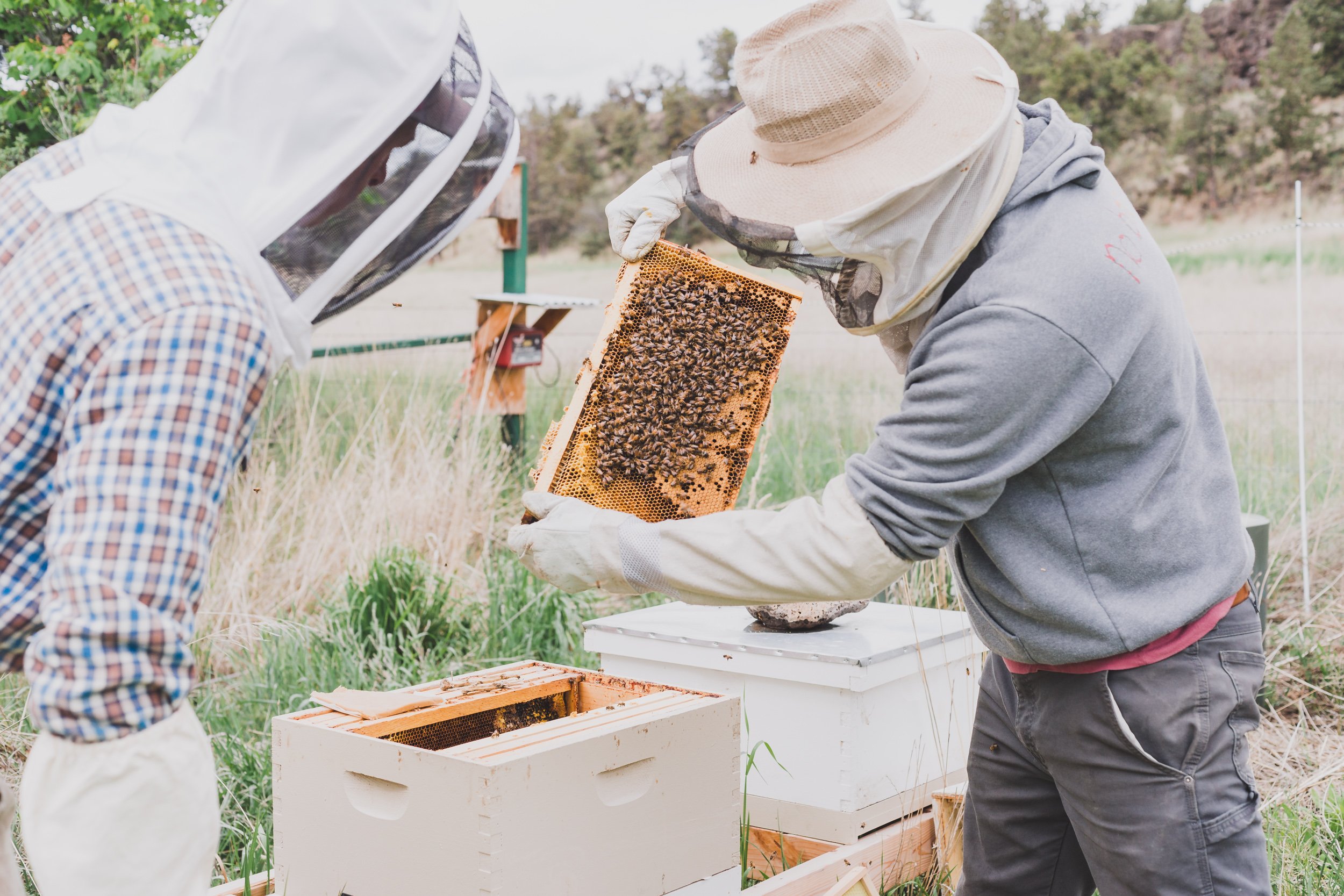
Caption: Broadus Bees helped install a hive at Sungrounded Farm in Terrebonne.
Photo courtesy Amanda Photographic.
[/vc_column_text][/vc_column][/vc_row]