
Empowering Farms, Nourishing Communities: HDFFA's Grants in Action
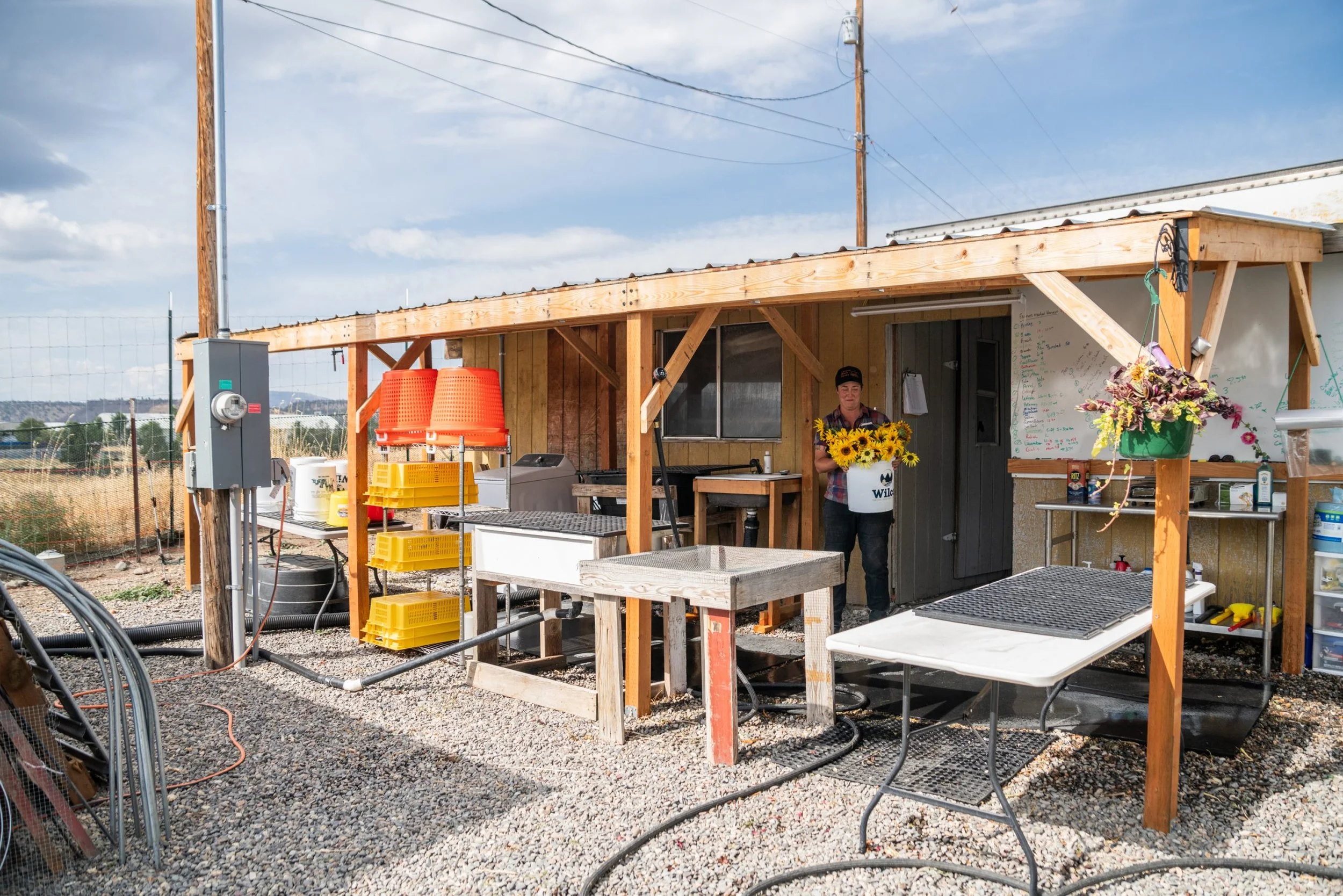
[vc_row][vc_column][/vc_column][/vc_row][vc_row][vc_column][vc_column_text css=".vc_custom_1726167689528{margin-bottom: 0px !important;}"]Empowering Farms, Nourishing Communities: HDFFA's Grants in ActionGrants for 2024 are helping to build a stronger, more sustainable future for local farmers, ranchers and the food on our tables[/vc_column_text][/vc_column][/vc_row][vc_row][vc_column][vc_column_text css=".vc_custom_1726167702919{margin-bottom: 0px !important;}"]Throughout Central Oregon, where water scarcity and harsh conditions challenge even the most determined farmers, small grants are making a big difference. High Desert Food & Farm Alliance's On-Farm Efficiency Grants are sowing seeds of resilience into local agriculture by helping farmers invest in seemingly simple solutions that deliver huge results, from upgrading irrigation ponds for efficiency to repairing cold storage areas at a generations-old ranch.By empowering small, local farms to overcome obstacles and innovate, the entire community gains so much: farm-fresh, delicious food that boosts not only our health but that of the local economy and the environment, too. Each grant offers up to $3,000 in matching funds to support improvements in infrastructure, supplies and professional development. Funded in 2024 by a private donor and the USDA, the grants focus on Central Oregon growers who prioritize sustainable practices and sell their products locally.[/vc_column_text][/vc_column][/vc_row][vc_row][vc_column][vc_column_text css=".vc_custom_1726167725209{margin-bottom: 0px !important;}"]HDFFA awarded a total of $23,677 to ten local farmers and ranchers in 2024. With the recipients' matching contributions, this resulted in more than $50,000 being invested in equipment and structures to improve efficiency in time management, water usage and crop yield. This helps alleviate many challenging factors, including the rising costs of land, labor and supplies to low profit margins and vulnerability to extreme weather and pests. “The stories of our grant recipients reveal just how crucial even a little local support can be in the risky, demanding — sometimes grueling — endeavor of growing local food,” said HDFFA Executive Director Sharon Maier-Kennelly. “At the same time, consumers are increasingly seeking not only locally grown food’s health benefits and flavor, they are also discovering the satisfaction of meeting local farmers and ranchers and being part of their vital work toward nurturing a healthy planet for future generations.”As part of the program, each awardee also participated in an agricultural workshop and they shared useful resources and what they learned, ranging from water rights issues to calculating production costs. They also detailed how their projects prompted innovative solutions, resilience and growth. [/vc_column_text][/vc_column][/vc_row][vc_row][vc_column][vc_column_text css=".vc_custom_1726167745396{margin-bottom: 0px !important;}"]HDFFA is deeply gratified by the successes that this diverse group had with their grant-supported projects, and is energized to partner with community donors to make that happen for a new crop of awardees in 2025.Here’s a look at the bountiful results the 2024 recipients reaped from the grant awards:[/vc_column_text][/vc_column][/vc_row][vc_row][vc_column width="3/5"][vc_column_text css=".vc_custom_1726167801217{margin-bottom: 0px !important;}"]Fields Farm, Bend: Improvising Irrigation Improvements for Big ResultsAt Fields Farm, the HDFFA grant not only satisfied the goal of fixing a crucial water management problem, but had an unexpected, added benefit. Jeremy Fox, who works alongside farm founders Debbie and Jim Fields, initially envisioned a straightforward solution to a water overflow problem. Irrigation water flowed into a pond, and would overflow across the driveway to a lower pasture. “We’re blessed to have so much water, but it creates a problem where it floods the driveway and the compost pile, hindering our compost development,” said Fox.The initial plan was to create a trenching system to move that excess water farther away. The grant covered machinery rental and labor, and the farmers found they could create a secondary pond to capture and better use the overflow water. "I’m really excited that with this second overflow pond, we have an opportunity to further irrigate and more efficiently use the excess water that used to just fill the compost pile, and now the compost is fitting into projects better,” said Fox.The project came with a lesson, he said: "You can plan something and have one idea of how it will turn out, but that doesn’t always mean it will go the way you intended.” [/vc_column_text][/vc_column][vc_column width="2/5"][vc_single_image image="28735" img_size="full" alignment="center" style="vc_box_rounded" css=""][vc_single_image image="28736" img_size="full" alignment="center" style="vc_box_rounded" css=""][/vc_column][/vc_row][vc_row][vc_column][vc_column_text css=".vc_custom_1726180775099{margin-bottom: 0px !important;}"]Kohrt R&R Acres, Bend - A Better Watering System, Row Covers and Premier StrawberriesThe HDFFA grant had a dramatic impact on Rebeccah Kohrt’s first year of running Kohrt R&R Acres in Bend, where she grows many kinds of spring greens, including lettuce, mizuna, spinach and Swiss chard, as well as strawberries. More efficient watering equipment and enhanced crop-protecting row covers helped extend the growing season for her, saving crops when temperatures dipped.“That really saved our bacon,” said Kohrt. “It got down to 23 degrees, and I didn't lose anything.”Switching to watering drip tape alleviated her biggest concern — using up her water allotment. “It's been absolutely fantastic,” she said. “We thought we would have drained the pond well before now. Those were very expensive startup things.”The row covers worked wonders for her strawberry harvest. “They were absolutely the sweetest, best strawberries I’ve had, and the plants were super productive,” said Kohrt.That was a win with her fledgling crop of six clients in the farm’s community-supported agriculture (CSA) program offering “shares” of the farm’s harvest. “They’re very happy,” said Kohrt. “It's been very rewarding.” [/vc_column_text][/vc_column][/vc_row][vc_row][vc_column][vc_column_text css=".vc_custom_1726168209973{margin-bottom: 0px !important;}"]Central Oregon Veterans Ranch, Bend — Berries and a Broader MissionThis ranch not only raises threatened Navajo-Churro sheep but also helps veterans develop their inner strength and find purpose by providing camaraderie and access to nature on a working ranch. The group sought the HDFFA grant to install a trellis berry-growing system to increase revenue generation, improve soil health, and create a closed-loop system that minimizes waste and maximizes the use of natural resources.[/vc_column_text][/vc_column][/vc_row][vc_row][vc_column width="2/5"][vc_single_image image="28734" img_size="full" alignment="center" style="vc_box_rounded" css=""][vc_single_image image="28733" img_size="full" alignment="center" style="vc_box_rounded" css=""][/vc_column][vc_column width="3/5"][vc_column_text css=".vc_custom_1726167940623{margin-bottom: 0px !important;}"]Canyon Moon Farms, Prineville - Vegetable Washing and Packing Station Packs Productivity Laura “L.J.” and Alia Fern used the HDFFA grant to build a washing and packing station at their farm, where they grow diverse vegetables, sell CSA “shares” of their harvest and contribute produce to HDFFA’s Fresh Harvest Kits, free ready-to-make meal kits for hunger relief agencies and food pantries. The farmers had been leasing tracts of land until about a year and a half ago, when they could finally buy land. The new location needed many farm basics, and the sturdy wash-pack facility allows them to efficiently prepare produce for sale, particularly in warm weather, when they need to cool the produce quickly."We’ve been more productive than we expected,” said L.J. Fern. “We’re even donating about 100 pounds of produce each week to the HDFFA Grow and Give fresh food donation program."As part of the grant requirement, they chose a workshop on fully understanding the cost behind a particular crop, calculating everything from seeds and weeding to harvesting and pricing. “It’s been good to have a shift in perspective on everything that goes into making your crop, how long you're spending and what you're selling it for,” she said.[/vc_column_text][/vc_column][/vc_row][vc_row][vc_column][vc_column_text css=".vc_custom_1726168073406{margin-bottom: 0px !important;}"]Wild Grown Farm, Redmond - A Better Pond Brings Safety, EfficiencyAt Wild Grown Farm, the farm pond was unlined and was so small that it would empty in a matter of hours, said owner Shannon Kane. She and her husband, Taylor Kane, used the HDFFA grant to make the pond deeper and line it, which has made operations dramatically more efficient and less exhausting for the Kanes to keep up with irrigation.The new pond also adds a source of fire protection for the farm for the flower and vegetable plant starts and chickens, which backs up to Bureau of Land Management public land. “Now we have water-holding capacity to defend our structures if we needed to do that,” Shannon Kane said. They also used the grant to add a fence around the pond to protect their two small children and visitors. [/vc_column_text][/vc_column][/vc_row][vc_row][vc_column width="3/5"][vc_column_text css=".vc_custom_1726180784203{margin-bottom: 0px !important;}"]North 44 Farm, Bend - Equipment Launched Expansion into Pasture-Raised ChickensNorth 44 Farm used their HDFFA grant to invest in brood lights and a watering system, allowing them to add raising chickens to their farm for grass-fed lamb and beef, said owner Courtney Schuur.Adding chickens was an innovative way to adapt to the region's water challenges. She said that in the last few years the Arnold Irrigation District would typically shut off their water in July or August, so they would move the sheep and cows off their 40-acre property. That left open wide swaths of semi-dry space — perfect for chickens. The brooding and watering systems allowed North 44 Farm to scale up their poultry production from 20 or 30 birds per month to 250 birds per month. "It's been a learning curve, and wouldn't have done it without the grant," said Schurr.[/vc_column_text][/vc_column][vc_column width="2/5"][vc_single_image image="28742" img_size="full" alignment="center" style="vc_box_rounded" css=""][vc_single_image image="28741" img_size="full" alignment="center" style="vc_box_rounded" css=""][/vc_column][/vc_row][vc_row][vc_column][vc_column_text css=".vc_custom_1726168232625{margin-bottom: 0px !important;}"]Hollyhock Hollow, Bend — Rainwater Capture SystemHollyhock Hollow used the HDFFA grant to develop a system for capturing elusive rainwater to irrigate their diversified flower farm. Through the new system, rainwater that falls on a larger, high tunnel is funneled into a low-impact irrigation system. This system directs flow to areas needing more water, reducing the cost of purchased irrigation. [/vc_column_text][/vc_column][/vc_row][vc_row][vc_column][vc_column_text css=".vc_custom_1726167888692{margin-bottom: 0px !important;}"]Zarah Meadows, Redmond: Converting from Flood Irrigation to PivotSonia Doel said the HDFFA grant helped with a small portion of a large-scale project, transitioning from flood irrigation to pivot irrigation to improve water efficiency on the 50-acre farm. “We were really challenged in getting water to our fields and even keeping any one area green, and then it would turn brown when we shifted the irrigation water,” she said. “We were chasing our tails and looking at possibly losing some of our water rights.”Converting to pivots took months and was a major upfront investment, but small grants such as the one from HDFFA helped make it possible. “It all really adds up and is extremely appreciated,” she said. “My husband and I were walking the fields this morning kind of giddy, because we're so happy to see the results.” The water efficiency allowed them to expand their irrigation and farm a greater area.[/vc_column_text][/vc_column][/vc_row][vc_row][vc_column width="1/3"][vc_column_text css=".vc_custom_1726168289923{margin-bottom: 0px !important;}"]DD Ranch, Terrebonne — Flood Irrigation ConversionDD Ranch is using the HDFFA grant to gradually convert their flood-irrigated pasture to a more efficient irrigation system. It’s a significant up-front investment that is expected to have long-lasting effects on water efficiency and the amount of pasture available on the family-owned and operated ranch raising grass-fed and finished beef and lamb, heritage pork, and producing raw local honey. [/vc_column_text][/vc_column][vc_column width="1/3"][vc_single_image image="28740" img_size="full" alignment="center" style="vc_box_rounded" css=""][/vc_column][vc_column width="1/3"][vc_single_image image="28739" img_size="full" alignment="center" style="vc_box_rounded" css=""][/vc_column][/vc_row][vc_row][vc_column][vc_column_text css=".vc_custom_1727135133824{margin-bottom: 0px !important;}"]Looking Ahead to 2025 — What You Can Do, What It Means for Central Oregon These inspiring stories go straight to the heart of an HDFFA core value — that everyone deserves good food, and that our food connects us to each other. Their grants demonstrate the power of community in helping everyone access affordable, nutritious, culturally appropriate food produced sustainably in Central Oregon in a way that benefits our local economy.As HDFFA looks forward to continuing this crucial work in 2025, they invite you to be part of this exciting, grassroots journey. Your contribution can plant the seeds for continued growth in nourishing our farms, our ranches and ourselves. Find out how you can support On-Farm Efficiency Grants here or reach out to the team. Together, we can cultivate a stronger, more resilient local food future.[/vc_column_text][/vc_column][/vc_row][vc_row][vc_column][vc_column_text css=".vc_custom_1727135187790{margin-bottom: 0px !important;}"]Photos by Amanda Photographic[/vc_column_text][/vc_column][/vc_row]